Skip to content
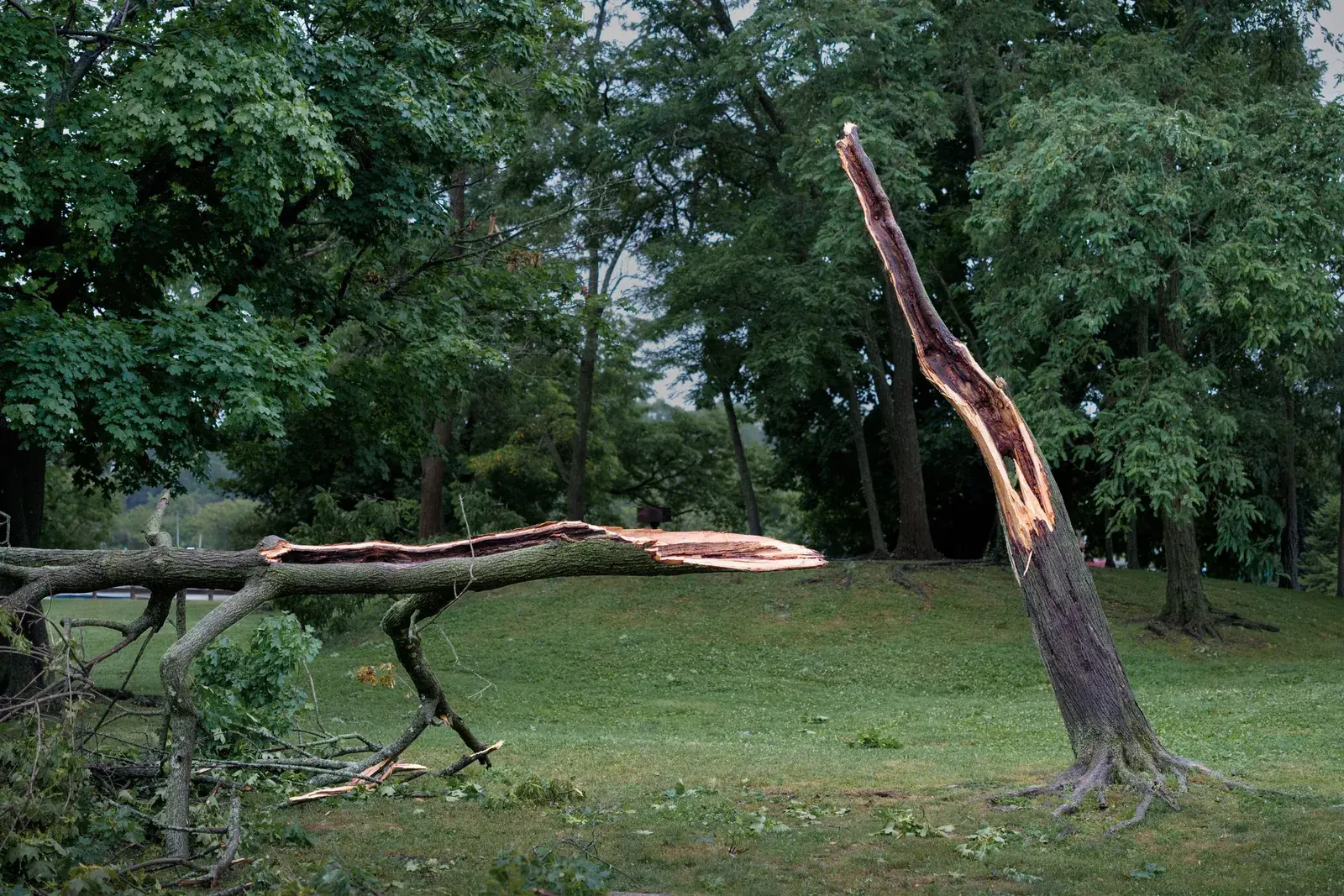
A trunk snapped by high wind with its broken top across the grass, waiting for emergency tree service

Emergency tree service in Yuba City, CA

Emergency tree service for Yuba City, Marysville, and the rest of Yuba-Sutter when a storm drops a tree or a big limb on your house, car, or fence, handled by a licensed local tree company that looks at the damage and quotes the work in writing.

Safety first

Tree down? What to do first

When a tree comes down on your house, your car, or a line on your street, the tree itself can wait while you look after the people around it. Emergency tree service starts after these 4 steps, so get everyone clear and report any downed line before you call a tree company.

Winter storms in Yuba-Sutter tend to hit after days of rain, when the ground around the roots has gone soft and one strong gust can tip a whole valley oak or tear a big limb off a Modesto ash. When that tree lands on your roof, your car, or a line on your street in Yuba City or Marysville, the order you do things in matters far more than how fast you move, and none of it needs a saw.

Look up before you walk toward the tree. A falling limb often drags down the wire that runs from the pole to your house, and that wire can hide in the leaves or lie in wet grass. PG&E says to treat every downed line as live, keep kids and pets away from it, and call 911 first and then PG&E at 1-800-743-5000. Until the utility makes it safe, the tree stays where it is.

  1. Step 01

    Get everyone clear

    Move people and pets out of the rooms under the tree and away from hanging limbs. Call 911 if anyone is hurt.

  2. Step 02

    Stay back from lines

    Stay 30 feet from a downed line, or 60 feet if the ground is wet. Treat every line as live, even a quiet one.

  3. Step 03

    Call 911, then PG&E

    For any downed or damaged line, call 911 first and then PG&E at 1-800-743-5000, in exactly that order.

  4. Step 04

    Photograph the damage

    Take photos of the tree, the damage, and where it landed before anything is moved. Your insurer will ask.

Source: PG&E: never touch a downed power line(opens in a new tab)

Is it an emergency?

What counts as emergency tree removal?

Emergency tree removal is for a tree or limb that's still doing damage, or could hurt someone if it shifts, and that's a call to make right away. Storm damage that's simply lying in your yard can usually wait for a regular visit and a written quote once the weather settles.

If the tree is resting on something you need, or hanging over a place people walk, it can't wait. A trunk lying across a roof keeps settling as the wood and shingles give, and every new gust adds weight to the load. A broken limb caught high in the canopy can drop with no warning at all. Those are the calls to make first, before you deal with anything else in the yard.

A tree that came down in the open part of the yard, clear of the house, the fence, and any lines, can usually wait for a regular visit and a written quote. The same goes for branches scattered across the lawn after a windy night in Live Oak or Plumas Lake. Keep kids and dogs away from the pile, take a few photos for your insurer, and book a regular visit when it's convenient for you.

Check the trees that are still standing, too. Wet winter soil is when roots let go, so a tree that lifted the lawn on one side, or an old Modesto ash with a fresh crack at the fork, may well be the next one to come down. Mention those when you get in touch, so the tree company can look at them on the same visit and you aren't back on the phone after the next big storm.

Treat it as urgent if

  • It's on the roof, a car, or a fence
  • It blocks the only way out
  • A broken limb is still hanging
  • The soil heaved up at the base

The storm cleanup process

How emergency tree service works after a storm

Once everyone is safe and any downed line has been reported to PG&E, your next call is to a licensed local tree company. Here's what usually happens from that first phone call until the tree is off your house and the yard is cleaned up.

When you get in touch, the tree company will ask what came down, what it landed on, whether anything is still hanging, and whether a line is involved. Have a few photos ready and be specific, like half a valley oak across the garage roof on a street in Yuba City. Ask when the crew can come out and what to do in the meantime. Timing depends on the crew and on the storm, so the tree company is the one who can answer it.

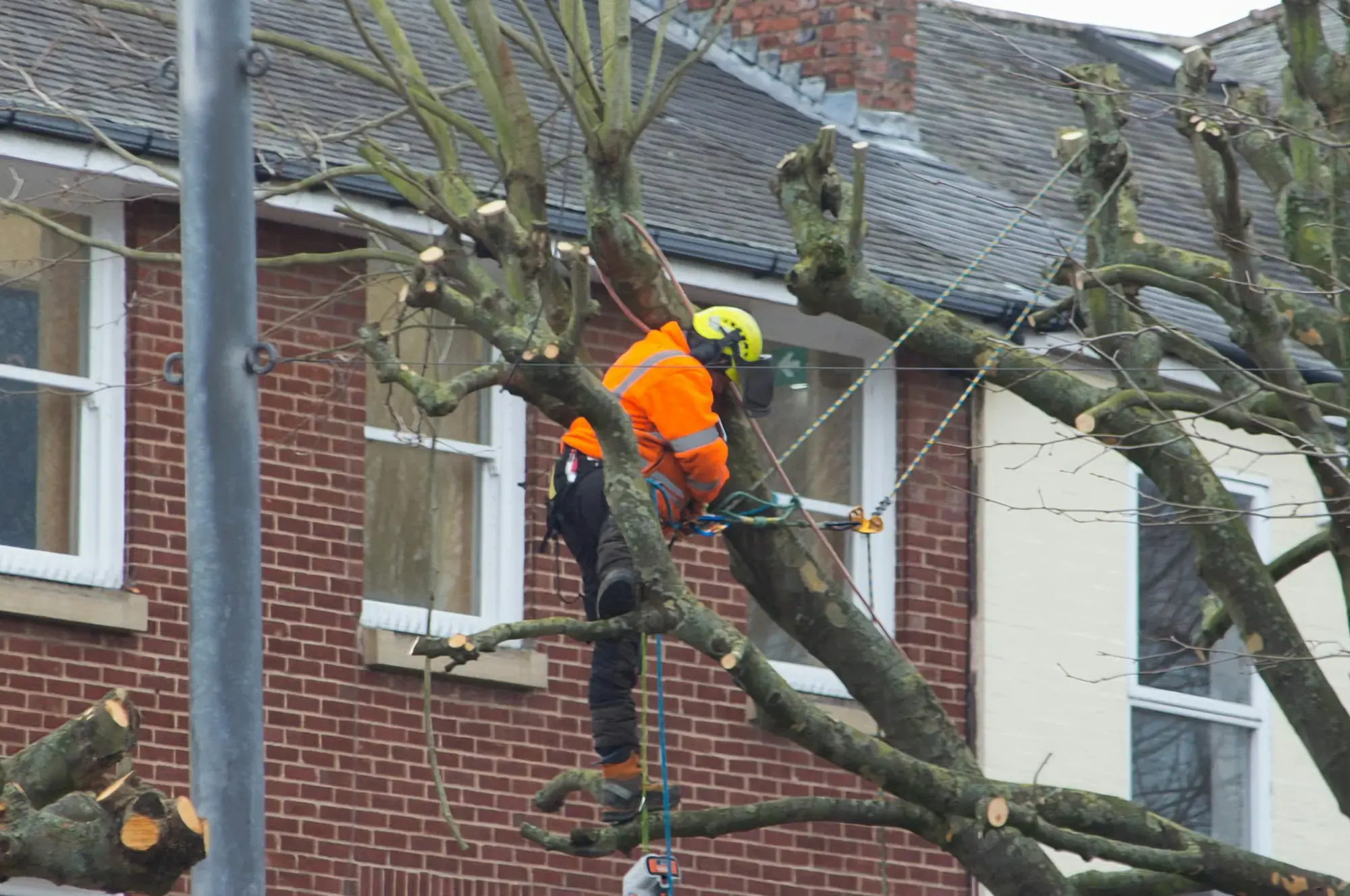
A tree on a house comes off in a planned order. Wood resting under load can spring or roll the moment it's cut, so the crew usually works from the top down, lifting or lowering each piece instead of letting it fall back onto the roof. A big trunk may need a lift or a crane. It's also why you shouldn't climb up there with a saw yourself, even when the limb looks small from the ground.

Once the tree is off, a tarp or boards over the opening keep the rain out until the roof is repaired. Ask whether the cleanup covers chipping the branches and hauling the wood, and whether the stump is part of this job or a separate visit later. Storm work is often split that way, with the urgent part done first and the rest once the weather clears and the yard dries out.

Until the crew arrives

  • Keep out of the rooms beneath it
  • Stay off the roof and ladders
  • Leave the chainsaw in the garage
  • Move cars out from under limbs

Storm cleanup cost

What affects the cost of storm cleanup?

The cost of storm cleanup comes down to where the tree landed, how big it is, how a crew can get to it, and how much wood has to be hauled away. That's why the same storm can leave two neighbors on your street with very different quotes for what looks like the same job.

Nobody can fairly price fallen tree removal over the phone, because the same valley oak is a very different job lying across an open lawn in Plumas Lake than resting on the roof of a house in Marysville. The licensed company looks at where it landed, how it's sitting, and how a crew can reach it, then puts the price in writing before any work starts, so you know the number up front.

Get that written quote even when you're in a hurry, and keep a copy. Your insurer will likely ask for it, and it's the clearest record of what the job covered. If the quote splits the emergency part from the cleanup, like lifting the tree off the roof now and hauling the wood later, check that both are spelled out on the page. Then there's nothing to argue about when the bill comes.

  • Where it landed

    A tree lying on a roof has to come off in a careful order, piece by piece, which is slower than one in the open yard.

  • Size of the tree

    A whole valley oak or pine is a much bigger job than a single broken limb, in cutting, lifting, and hauling away.

  • Getting equipment in

    Fences, soggy lawns, and narrow side gates decide whether a truck, a lift, or extra hands do the heavy lifting.

  • Debris and haul-away

    Chipping the branches and hauling off the wood can be a big part of storm work. A good quote lists both of them.

Downed lines and roads

Who to call for a tree on a line or a road

If the tree came down on a power line or across a public road, your first call isn't to a tree company. The utility or the agency that looks after that road goes first, and a licensed tree company handles whatever is left in your yard once it's safe to work.

A tree on a power line is PG&E's to deal with until the utility says otherwise, and that includes the wire from the pole to your house. Call 911 and then PG&E at 1-800-743-5000, keep everyone well back, and leave the tree alone. Once PG&E has made the line safe, a licensed tree company can come out to take down whatever is left standing and clear the wood out of the yard.

A tree across a public street goes to whoever looks after that road. Inside Yuba City, Marysville, or Live Oak, that's the city's public works department. Plumas Lake, Olivehurst, and Linda are unincorporated, so a tree blocking a county road there goes to Yuba County Public Works through its road maintenance request. Rural Sutter County roads go to Sutter County, and highways like 99 and 70 belong to Caltrans.

When you report it, say

  • The street and nearest cross street
  • Whether a wire is touching it
  • If both lanes are blocked
  • Whose yard the tree came from
Source: Yuba County Public Works: report a road problem(opens in a new tab)

Insurance claims

Does insurance cover a fallen tree?

Often it does, but your own policy and what the tree hit decide how much your insurer pays. Call your insurance company as soon as everyone is safe, and ask what photos, quotes, and receipts the insurer will want to see for your claim.

California's Department of Insurance says damage from fallen trees is generally covered under standard homeowners policies, though exceptions apply and your deductible still counts. If the repair costs less than the deductible, the insurer doesn't have to pay. A tree that comes down without hitting anything can be treated differently, so read your own policy and ask your insurer what yours covers.

The department also suggests temporary repairs to stop the damage from getting worse, like a tarp over the hole in the roof, and holding off on permanent repairs until the adjuster has seen it. Take photos before anything moves, keep every receipt for cleanup and repairs, and write down each conversation with your insurer. The tree company's written quote belongs in that same file.

Storms bring out people knocking on doors with a chainsaw and a pickup. Before anyone starts cutting, check that the company holds an active California license at cslb.ca.gov, which is the same step the Department of Insurance recommends, and get the price in writing. A licensed company and a written quote make the claim much easier, and they keep you from paying for the same job twice.

For the claim, keep

  • Photos from before anything moved
  • Your policy and declarations page
  • Notes from every call with the insurer
  • Receipts for tarps and boards
Source: California Department of Insurance: tips after winter storms(opens in a new tab)

Before you call

Emergency tree service questions

Call 911, then PG&E at 1-800-743-5000, which is the order PG&E asks for. Stay at least 30 feet back, or 60 feet on wet ground, and keep kids and pets inside. Don't touch the tree, the line, or anything touching them. A tree company can take over only once PG&E has made the line safe.

Call your own insurance company first and tell them what happened. Who ends up paying can depend on the tree's condition before it fell, and that's for the insurers involved to sort out. Take photos of the tree and the damage before anything is moved, and keep the tree company's written quote.

California's Department of Insurance says a falling tree is generally a claim under the comprehensive, or other than collision, part of an auto policy, so check that you carried it. Photograph the car before the tree comes off, and don't try to drive it out from under the weight.

There's no set price, because it depends on what the tree landed on, how big it is, and how a crew can reach it. A trunk on a roof takes more care than a limb on the lawn. The tree company looks at it and puts the price in writing before any work starts. We don't charge homeowners.

Ask the tree company when you get in touch. It sets its own hours and will tell you how soon a crew can come out to your street. If anyone is hurt or a line is down, call 911 right away rather than waiting on a tree company.