Skip to content
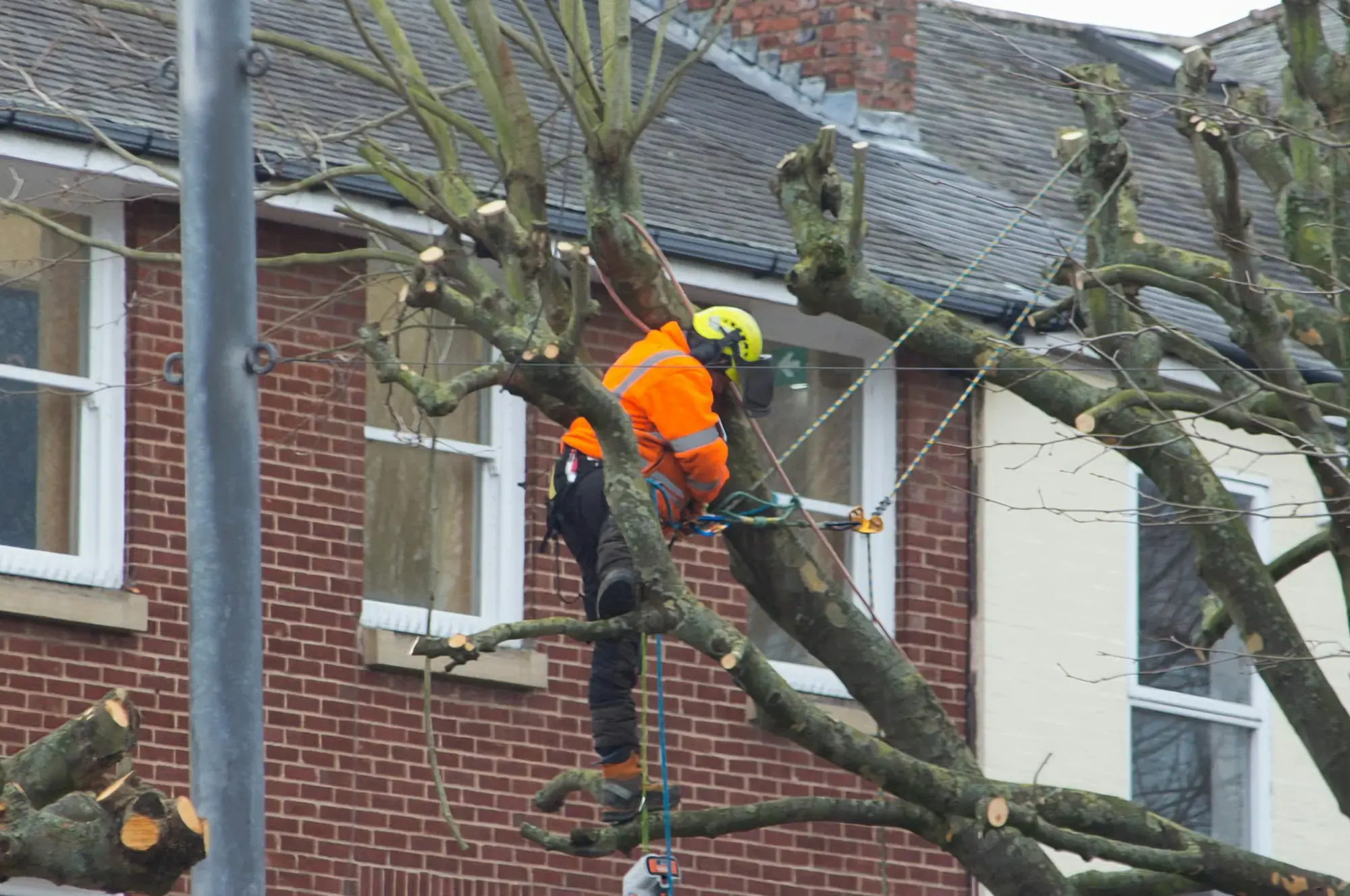
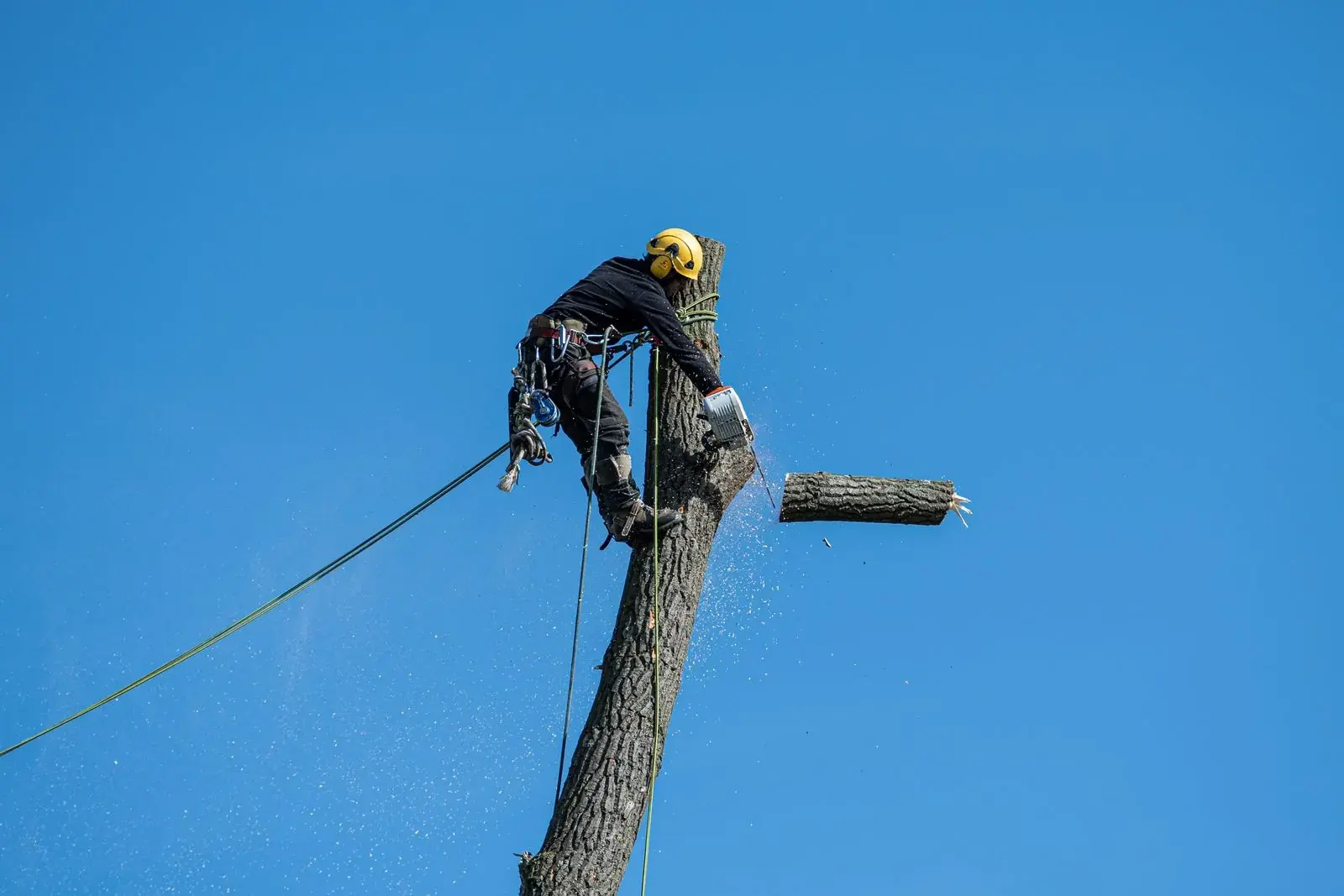
A climber on ropes cutting a section off the top of a tall trunk during a tree removal

Tree removal in Yuba City, CA

Tree removal in Yuba City, Marysville, and the rest of Yuba-Sutter for trees that are dead, leaning toward the house, or too big for the yard, handled by a licensed local tree company that looks at the tree first and quotes it in writing.

Signs a tree should go

When should a tree be removed?

Most trees show trouble long before they fall, so if you're wondering whether it's time for tree removal in Yuba City, start with what you can see. Some signs are easy to spot from the patio, and one of the most serious hides inside the wood where you can't see it.

Rot is the warning that's easiest to miss. UC's pest management program notes that some decay fungi push up mushrooms at the base of a tree after fall and winter rain, and that many branches which fall looked sound beforehand. A tree can stand for years with its center going soft, then let go when the wet ground and wind of a winter storm hit it together. So even a tree that looks fine from your yard can be worth a second look before winter.

A dead tree gets more brittle every summer. In the long, dry heat around Yuba City and Live Oak, dead limbs can snap off on a calm afternoon, and the wood gets harder to take down safely the longer it stands. Dead tree removal is usually a simpler job while the trunk still holds together, so it's worth having the tree company look at it before the winter rain starts.

A tree doesn't have to be dead to need to come down. A Modesto ash or a mulberry planted close to the house grows over the roof, lifts the driveway, and pushes against the foundation. Its roots can buckle the patio and the sidewalk out front, too. A licensed local tree company can tell you whether cutting it back will do or it's time to take it down, so you go into storm season knowing where you stand.

Signs worth a closer look

  • Bare branches in the middle of summer
  • Bark falling away in patches
  • Soil heaving up on one side
  • Soft or hollow spots in the trunk
  • Roots cut by a new trench or patio
  • A deep split where 2 trunks meet
Source: UC IPM: wood decay fungi in landscape trees(opens in a new tab)

The tree removal process

How tree removal in Yuba City works

Most tree removals around Yuba-Sutter follow the same 4 steps, from the first look at your tree to the last pass with the rake. Your part comes mostly at the start, when you tell the tree company what worries you and point out anything under the limbs it should know about.

Nobody can price a removal well over the phone. The tree company needs to see the tree, what sits under it, and how a truck can get close, because those things decide how it comes down. A tall pine in an open Plumas Lake backyard is a very different job from the same pine leaning over a roof on a tight lot in one of Marysville's older neighborhoods. Each one gets its own plan for the day.

Tree cutting next to a house is slow, careful work. A climber or a lift takes the limbs off first, then the trunk comes down in short pieces, each one lowered on a rope so nothing lands on the roof, the fence, or the pool. Where there's open ground and nothing in the way, the crew may be able to drop the whole tree in one piece, which is quicker and leaves less to clean up.

  1. Step 01

    Someone looks at the tree

    The tree company checks the trunk, the limbs over the house, and where a truck or chipper can park close by.

  2. Step 02

    You get a written quote

    The quote lists the takedown, hauling, stump grinding, and cleanup, so you can see exactly what's included.

  3. Step 03

    The crew takes it down

    On the day, the crew brings the tree down the way the quote describes, all at once or a piece at a time.

  4. Step 04

    The yard gets cleaned up

    Branches go through the chipper, and the wood is hauled off or left in rounds, so your yard is clear again.

Tree removal cost

What affects the cost of tree removal?

The cost of tree removal mostly comes down to how big your tree is, what it hangs over, and how easily a crew can reach it. There's no flat price you can look up ahead of time, so these 4 things decide most of what you'll see on the written quote.

Two trees the same height can be quoted far apart, because the work around a tree matters as much as the tree itself. A Canary Island palm out by the street and a valley oak spreading over a backyard pool can look about the same size from the sidewalk, yet need very different crews, gear, and time. That's why the tree company comes out before it puts a price on anything.

Much of what you pay for is the part you never see, like a trained crew, a chipper and truck, insurance for the work, and the trips to haul the wood away. Stump grinding and haul-away are often their own lines on the quote, so you can leave off what you don't need. If you have more than one tree in mind, mention them all at once so they end up on a single quote.

  • Size and trunk width

    A tall valley oak or pine takes more climbing, cutting, and hauling than a small fruit tree, so size counts most.

  • What's underneath

    A roof, fence, pool, or line under the limbs means lowering every piece on ropes instead of dropping the tree.

  • Getting equipment in

    A backyard behind a narrow side gate means more climbing and carrying by hand, since a truck or lift can't reach.

  • The tree's condition

    Dead or split wood is brittle and harder to lower safely, so a dying tree can take more care than a healthy one.

Permits and city rules

Do you need a permit to remove a tree?

It depends on whose tree it is and which town you live in, since a tree in your own yard and a street tree out front follow different rules. A quick check before the work is booked means the day the crew shows up is the day your tree actually comes down.

In Yuba City, a street tree owned by the city is the city's decision. You fill out a Street Tree Removal Request for Parks Maintenance, send photos or a map of the tree with it, and the city may come out to inspect. If the tree is dead or qualifies for removal, the city schedules the work. Dropped leaves, sticky sap, or bugs on their own aren't reasons the city accepts.

Rules change from town to town. Marysville and Live Oak have their own city codes, while Plumas Lake, Olivehurst, and Linda are unincorporated, so Yuba County's rules apply there. Some neighborhoods add HOA rules on top of that. Check with your city or county before the work is booked, and ask the licensed tree company what it has seen apply to trees like yours.

Ask before work is booked

  • Is it your tree or the city's?
  • Does your town need a permit?
  • Does your HOA have tree rules?
  • Is it anywhere near a power line?
Source: Yuba City Parks: street tree removal request(opens in a new tab)

Trees near power lines

Can a tree near a power line be removed?

Yes, but PG&E has to come first, and nobody should start cutting near a line until the utility has looked at it. What happens after that depends on which wires your tree is near, the lines up on the poles or the ones running from the pole to your house.

PG&E asks everyone to keep people and tools at least 10 feet from power lines, and to leave tree work near them to crews trained for line clearance. If a tree or limb is touching a line, call 911 first. For a tree that's only close, call PG&E at 1-800-743-5000. The utility trims and removes trees around its own lines and can tell you which parts of the job it will handle and which it won't.

The wires running from the pole to your house are a different story. PG&E calls them the service drop, and keeping trees clear of them is the property owner's job. PG&E can switch off your power for a short time, at no charge, so a crew can work near those wires safely. Once the line is safe, a licensed tree company can take the rest of the tree down and clear it away.

Source: PG&E: trees near power lines(opens in a new tab)

What's included

What does a tree removal service include?

A tree removal service can mean taking the tree down and nothing more, or the whole job right down to a raked yard. Every tree company draws that line in its own place, so the written quote is where you find out which one you're getting.

Every removal quote covers taking the tree down. Hauling the wood, grinding the stump, and the final cleanup are often separate lines, and some companies leave the logs in the yard unless you ask for them to go. Go over it line by line before any work starts and ask about anything you expected that isn't there, so there are no surprises once the crew packs up and drives off.

You also get a say in what's left behind. Some people keep oak or almond rounds to split for firewood next winter. Others leave the stump for now and grind it later, or keep the grindings to spread as mulch. Say what you'd like before the quote is written. You deal directly with the licensed company, so those choices get settled with them and written down on the quote.

Planning to put a new tree in? Mention it when the tree company comes out to look. The stump usually needs grinding deeper for that, and a spot a few feet away from the old one gives new roots an easier start. Fall and winter are the gentle seasons to plant in the valley's heat, so a removal this time of year leaves room to have something new growing back by spring.

Check that the quote lists

  • The company's CSLB license number
  • Who hauls the wood and brush
  • How deep the stump is ground
  • Raking and blowing off the yard
  • The day the work is planned
Source: CSLB: hiring a licensed contractor(opens in a new tab)

Before you call

Tree removal questions

It depends on the tree's size, what sits underneath it, and how a crew can reach it, so two trees on the same street can be priced very differently. The tree company looks at the tree and gives you a written quote before any work starts. We don't charge homeowners for the referral.

It depends on your policy. Coverage usually turns on whether the tree damaged a covered structure, like the house or a fence. Taking down a dead or unwanted tree that hasn't hit anything is usually not covered. Your insurance company can tell you what your policy says.

Not always. Being close doesn't make a tree dangerous on its own, and a healthy one may only need its limbs cut back off the roof. If it's leaning toward the house, dropping limbs, or lifting the slab, have a licensed tree company look at it.

A dead, cracked, or leaning tree shouldn't wait for a better season. For a healthy tree, timing is more flexible. Soggy winter ground can make it harder to get equipment into a backyard without rutting the lawn, and if birds are nesting in the tree in spring, mention it when you get in touch.

A little. Tall fan palms and Canary Island date palms have no side limbs to take off first, so the crew usually cuts them from the top down in short pieces. Most single-trunk palms don't sprout back from the stump the way many other trees can. Ask whether the stump gets ground out or left.