Skip to content
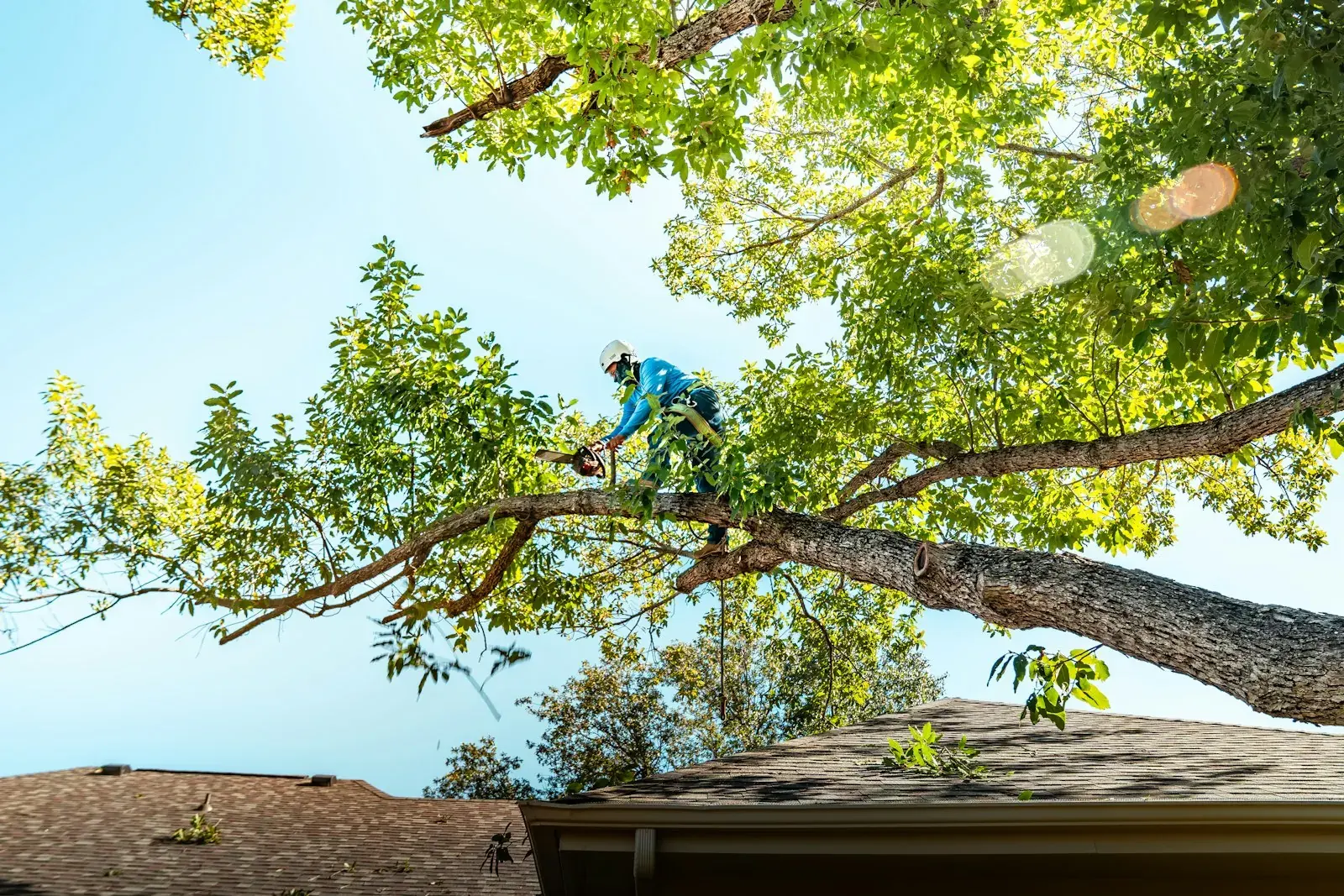
A climber on a long limb above a house roof, pruning it back during a tree trimming job

Tree trimming in Yuba City, CA

Tree trimming and pruning in Yuba City, Marysville, and the rest of Yuba-Sutter for limbs over the roof, shade trees grown too thick, and fruit trees, handled by a licensed local tree company that looks first and quotes it in writing.

Signs a tree needs trimming

Does your tree need trimming?

Most people in Yuba City start thinking about tree trimming once a tree gets in the way of the house, the driveway, or the view from the back porch. A few signs are worth catching sooner, while the fix is still a simple trim and nothing has come down yet.

Limbs resting on your roof or rubbing the gutter are the most common reason people in Yuba City and Marysville call. Every summer of growth makes a long limb heavier, and one winter storm with wet wind can bring it down on the shingles. Cutting it back to a clean point now is a much smaller job than a roof repair later, and your gutters stop filling with leaves every fall.

Dead wood is the other big one. Bare branches high in a valley oak or a Modesto ash can hang on for years, then drop without warning on a hot July afternoon or in a December gust. If you see limbs with no leaves in summer, a cracked branch, or a broken one caught in the canopy, have them taken out before anyone parks, plays, or sets up the patio chairs under them.

Some trims are about how you live with the tree. A shade tree grown too thick can starve the lawn below and block the evening breeze, low limbs scrape the car in the driveway, and fruit trees left alone get so tall the apricots and plums end up out of reach. A good tree trimming service thins and lifts the canopy so the tree still looks like itself when the work is done.

Also worth a call

  • Limbs over the pool or patio
  • Split bark where 2 limbs meet
  • Branches crowding the AC unit
  • Leaves hiding the house number
  • Sprouts shooting up the trunk

Best time to prune

When is the best time for tree pruning?

For most shade and fruit trees in your yard, the best time for tree pruning in the valley is winter, after the leaves drop. Your apricots and cherries wait for summer instead, and dead or hanging limbs can come out any time you spot them.

UC's Integrated Pest Management program calls winter an ideal time to prune deciduous fruit and shade trees. Once the leaves drop, the tree is dormant and every branch is easy to see, so the cuts can be chosen with care instead of guessed at through a full canopy. In Yuba-Sutter that means the cool, bare months between leaf drop in late fall and the first blossoms of spring.

Apricots and cherries are pruned on a different clock. UC Master Gardeners in Sacramento County advise pruning them in July or August, after harvest, because Eutypa, a fungus that kills whole branches, gets in through cuts made in wet weather. If you have an old apricot left over from the orchard days in your backyard, mention it when you get in touch so the tree company plans that one for summer.

Dead, broken, or hanging limbs don't need to wait for a season. They're worth taking out whenever you spot them, and fall is a smart time to have the trees over the house looked at before winter storms and soggy ground arrive. Save the heavy cuts on shade trees for winter, though, since bark that suddenly loses its shade can sunburn under a long, hot Yuba City summer.

A rough calendar for valley yards

  • Winter: shade and fruit trees
  • July or August: apricots, cherries
  • Any time: dead or hanging limbs
Source: UC IPM: pruning trees in winter(opens in a new tab)

The tree trimming process

How tree trimming in Yuba City works

Tree trimming in Yuba City usually follows the same order, from the first walk around your tree to a raked yard with the brush hauled off. Most of the careful planning happens on the ground, well before anyone climbs into the canopy or starts a saw.

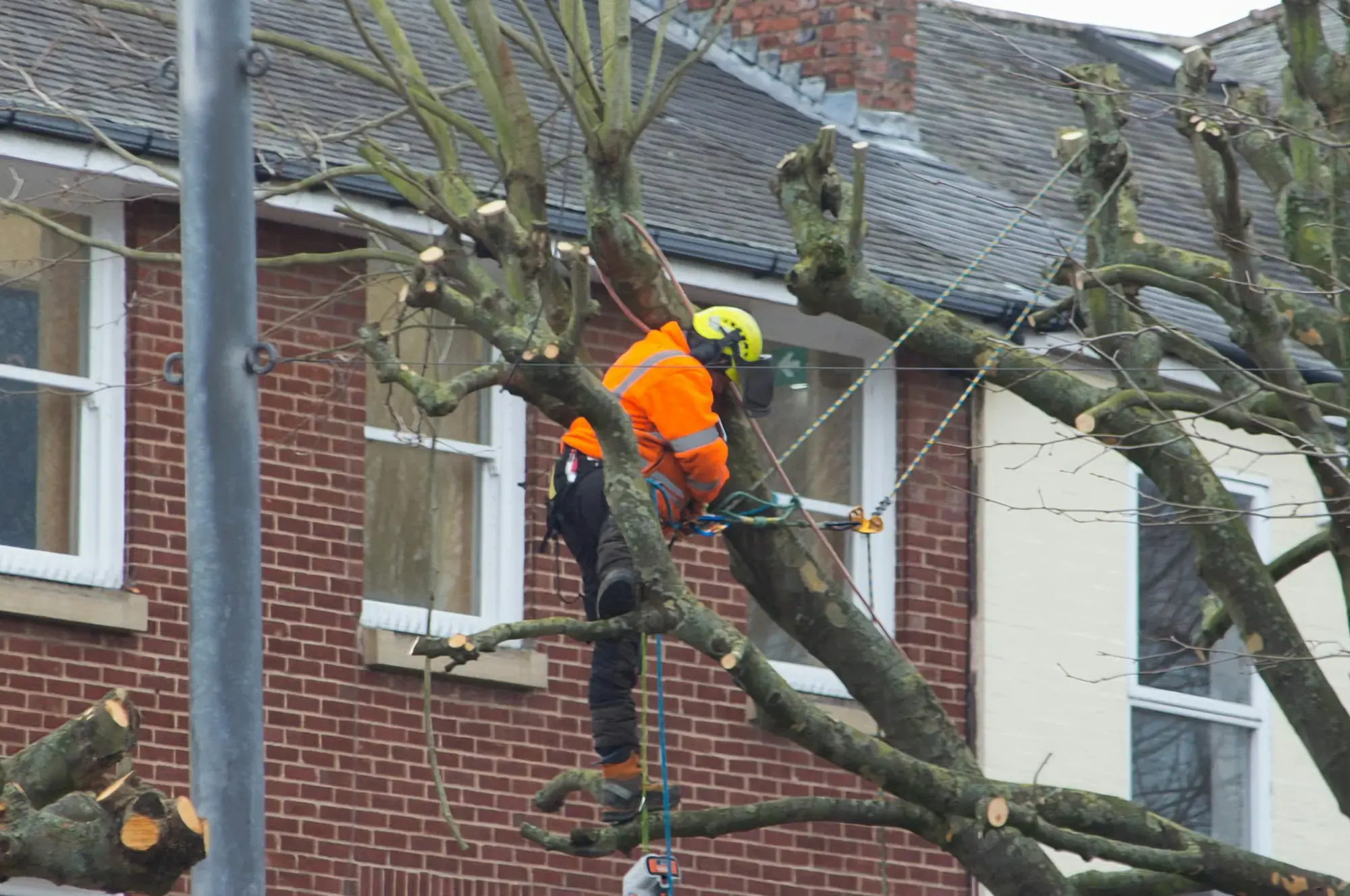
Trimming a big tree next to your house is slow, careful work. A licensed local tree company comes out, walks around the tree with you, and checks what sits underneath, like the roof, the fence, the pool, or the neighbor's carport. That first look decides how the crew reaches the high limbs and where the cut branches can safely come down without landing on anything you care about.

The written quote is the part worth reading closely. It should say which limbs come off, roughly how much of the canopy stays, and whether the brush gets chipped and hauled away or left in a pile by the curb. If something you pointed out is missing, ask before the work is booked, because changing the plan halfway up a tree is harder on everyone, you included.

  1. Step 01

    A walk around the tree

    Point out what bothers you, like the limb over the roof or the shade, and the tree company shows you the cuts.

  2. Step 02

    The cuts go in the quote

    The written quote says which limbs come off, roughly how much, and whether hauling the brush is included.

  3. Step 03

    The crew climbs and cuts

    Climbers or a lift reach the high limbs, and branches over the house are lowered on ropes, not dropped.

  4. Step 04

    The brush gets cleared

    Branches go through the chipper and the yard is raked, as the quote lists. You're left with a lighter, tidier tree.

Tree trimming cost

What affects the cost of tree trimming?

The cost of tree trimming comes down to your tree and your yard, since every job is priced one tree at a time. The 4 things below decide most of what you'll see on the written quote, from how tall the tree is to how the brush gets out of your backyard.

Two trims on the same street can be priced far apart. Taking a few dead limbs out of a young Chinese pistache is a short visit from the ground, while thinning a big valley oak that spreads over the house and the neighbor's garage means climbers, ropes, and a chipper. That's why the tree company wants to see your tree in person before it puts a number in writing.

If you have more than one tree, mention every one of them when you get in touch. Several trees done in one visit are usually quoted together, so the fruit trees in the back can be looked at alongside the shade tree out front. It also helps to say which problem bothers you most, like the limb on the roof or the shade on the lawn, so the written quote starts with that one.

  • Size and height

    A tall oak or pine needs a climber or a lift, while a small fruit tree can often be pruned from a ladder.

  • How much comes off

    Taking out dead wood is lighter work than cutting a heavy canopy back off the roof, gutters, and chimney.

  • What's under the limbs

    Branches over a roof, pool, or fence get lowered on ropes, piece by piece, which takes more hands and time.

  • Access and cleanup

    A tight side gate means carrying brush out by hand, and chipping and hauling every branch adds to the job.

Power lines and street trees

Who trims trees near power lines?

It depends on which wire the branches are near and whose tree it is, since the lines along the street, the wire to your house, and a city street tree each have a different owner. Knowing which one you're looking at tells you who to call first and keeps everyone a safe distance from the power.

The lines that run along the street from pole to pole are PG&E's to keep clear, and its vegetation crews inspect them every year. If branches are growing into those wires, keep ladders and pole saws well away and call PG&E at 1-800-743-5000. PG&E asks everyone to keep people and tools at least 10 feet from a power line whenever a tree is involved, even a small one.

The wire from the pole to your house is called the service drop, and PG&E says keeping it clear of branches is the property owner's job. PG&E can also disconnect your service for the work at no cost, which makes trimming around that wire much safer. Mention the wire when you get in touch, so the tree company can plan its cuts around it and ask PG&E to switch off the power if needed.

A tree between the sidewalk and the curb usually belongs to the city, and in Yuba City, Parks and Recreation handles street tree requests. If you live in Marysville or Live Oak, check with your own city before anyone trims one too. For a neighbor's tree hanging over the fence, talk with them before any branches come off, and you'll keep the peace on both sides.

Who to call first

  • Limb over your roof: a tree company
  • Branch in a street line: PG&E
  • City street tree: your city
  • Neighbor's tree: the neighbor
Source: PG&E: trees and power lines(opens in a new tab)

Topping and over-pruning

Is topping bad for a tree?

Yes. UC IPM advises against topping, because cutting a big tree back to stubs leaves it weaker and quicker to grow back than before. Good pruning usually takes off less wood than you'd expect, and your tree keeps its natural shape when the work is done.

Topping means cutting big branches back to stubs to shrink a mature tree, and you'll still hear it offered around the valley as a quick fix for a tree that's grown too tall. The trouble starts after the cut. The shoots that sprout below each stub are weakly attached, they grow back fast and crowded, and they break easily in the kind of wind that blows through Yuba-Sutter every winter.

Taking off too much at once does harm too. UC IPM warns that over-pruning leaves needless wounds and can sunburn bark that used to sit in shade, a real risk when a Live Oak or Plumas Lake summer runs past 100 degrees. General tree-care guidance keeps a single trim to about a quarter of the living canopy at most, and plenty of healthy trees need far less than that.

Ask the tree company which cuts it plans and why. Thinning cuts take a branch back to where it joins a larger one, and UC IPM says they spread new growth evenly and keep the tree's natural form. Shortening every limb to the same length does the opposite, leaving a denser tree that needs trimming again sooner and a canopy that looks chopped instead of shaped.

Ask the tree company

  • Which limbs come out, and why
  • Thinning cuts, not topping
  • How much of the canopy stays
  • Clearance over roof and drive
Source: UC IPM: pruning trees and shrubs(opens in a new tab)

Before you call

Tree trimming questions

It comes down to your tree. A tall oak over the house takes more work to trim than a fruit tree you can reach from a ladder, and hauling the brush away adds to it. The tree company looks at the tree and gives you a written quote. We don't charge homeowners for the referral.

It depends on the tree. Fruit trees are usually pruned every winter. Young shade trees do well with light shaping every few years, and mature ones mostly need dead wood taken out and limbs kept off the roof. Ask the tree company what yours needs when someone comes out to look.

It changes where a tree grows more than how much. UC IPM notes that thinning cuts spread new growth evenly, while cutting a branch short pushes out a burst of dense shoots below the cut. On fruit trees, a winter prune puts the tree's energy into fewer, stronger branches you can reach.

The season isn't what sets the price. The size of the tree, what's under it, and how much comes off decide most of it. Winter does suit most shade and fruit trees in the valley, since they're dormant and every branch is easy to see, so fall is a good time to ask for a written quote.

Talk to your neighbor first. Cutting a tree in a way that harms it can cause trouble even when the branches are on your side, so settle it between you before anyone climbs a ladder. Once you've agreed, the tree company can tell you what it's able to take on.